
Best Hair Fall Treatment in Hyderabad
- Home
- Hair fall Treatment in Hyderabad
Best Hair Fall Treatment in Hyderabad
Healthy Scalp. Healthy Hair.
Hair is our crowning glory, a reflection of health, personality, and confidence. Excessive hair fall can be distressing and often affects self-esteem in both men and women. Many people now search for the best hair fall treatment in Hyderabad, hoping to regain fuller, healthier hair. At our clinic, we offer scientifically backed solutions to help restore hair growth naturally.
To understand hair fall and choose the right hair fall treatment in Hyderabad, it is important to know how the hair cycle works. Hair loss may appear as gradual thinning or complete baldness depending on the stage. The hair growth cycle has three phases – Anagen, Catagen, and Telogen. In the Anagen (active growth) phase, hair grows continuously for 2–10 years on the scalp. The duration of this phase decides the final hair length. Next comes Catagen, a short transition phase lasting 1–3 weeks where growth stops and hair detaches from the follicle. Finally, in the Telogen resting phase, hair sheds naturally, lasting 2–3 months before new growth begins. On average, hair grows about 1 cm per month.
An adult scalp contains around 1,00,000 hair strands, and losing 50–100 strands per day is completely normal. At any time, nearly 90% of hair is actively growing while around 9% remains in the resting phase. However, when shedding increases or visible thinning begins, consulting experts for hair fall treatment becomes important. With advanced hair fall solutions in Hyderabad, early diagnosis can control damage, improve scalp health, and support regrowth. If thinning progresses further, hair restoration treatment in Hyderabad plays a key role in regaining hair density and confidence.
Hair loss can be patchy or diffuse based on cause. Identifying symptoms at the right time enables more effective treatment results. If you are worried about thinning volume, receding hairline, heavy shedding, or slow regrowth — walk in for expert guidance. We provide hair loss treatment in Hyderabad tailored to individual concerns with the aim of achieving healthy regrowth.
What is Hair loss?
Hair loss, medically known as Alopecia, may occur in patches or diffusely across the scalp. Normally, losing up to 100 strands a day is part of the natural cycle. But when the count exceeds, regrowth is poor, or scalp visibility increases, it’s time to seek hair fall control treatment in Hyderabad from a qualified dermatologist. Even if shedding is mild but thinning is noticeable, early intervention with the best clinic for hair fall treatment in Hyderabad can prevent future damage and restore hair quality.
Whether the concern is genetic hair loss, stress-related shedding, nutritional deficiency, hormonal imbalance or lifestyle triggers — timely care can make a significant difference. Many patients today are opting for permanent hair fall treatment in Hyderabad for long-term results and healthier hair.
Common Causes of Excessive Hair Fall
Excessive hair fall can affect anyone and may lead to thinning or noticeable hair loss. Consulting an expert is important to identify the underlying cause and choose the right hair fall treatment in Hyderabad. Common factors contributing to hair loss include:
Heredity
Genetic factors often cause patterned hair loss or baldness, leading to gradual thinning of hair over time in both men and women.
Nutritional Deficiency
Lack of essential nutrients like iron, protein, and vitamins weakens hair follicles and contributes to excessive hair shedding.
Fungal infections of the scalp
Fungal infections on the scalp can damage hair follicles, causing itching, scalp irritation, and increased hair fall
Prolonged illness or medical conditions
Certain health conditions and long-term illnesses may disrupt the hair growth cycle, leading to noticeable hair thinning.
Stress, smoking, and unhealthy lifestyle
High stress levels, smoking, poor sleep, and unhealthy habits can weaken hair roots and trigger excessive hair fall.
Crash diets and poor nutrition
Hormonal changes after delivery or due to thyroid disorders can disrupt hair growth cycles and increase hair shedding.
Understanding Different Types of Hair Fall and Their Causes
Hair loss can occur in various forms, and identifying the type is essential for effective hair fall treatment in Hyderabad. Broadly, hair loss (alopecia) is classified into scarring and non-scarring types. Non-scarring alopecia occurs when hair follicles remain healthy, allowing for potential regrowth. Common causes include:
Androgenetic alopecia (Baldness)
Androgenetic alopecia is a common cause of hair loss, often seen with increasing age and in genetically predisposed individuals.
Male Pattern Hair Loss
Baldness is a frequent form of hair loss in both men and women. It can begin as early as the teenage years, with the risk increasing over time. In men, it typically manifests as a receding hairline and thinning on the top and front of the scalp. Nearly 50% of men over 50 years experience baldness of varying degrees.
Female Pattern Hair Loss
In women, patterned hair loss usually presents as a widened hair parting and diffuse thinning across the scalp. Unlike men, women rarely become completely bald. It is more common in post-menopausal women. When patterned hair loss occurs at a younger age, it is often due to hormonal imbalances, such as Polycystic Ovary Syndrome (PCOS). Multiple factors have led to the early onset of baldness in girls as young as 18 years.
Telogen effluvium
Telogen effluvium is a condition where hair shedding occurs after a stressful event. Many people notice increased hair loss following high-grade fever (such as typhoid or malaria), post-delivery, surgery, crash diets, emotional stress, serious injuries, iron deficiency, or thyroid problems. Once nutrients are replenished, hair usually regrows within six months.
Alopecia areata
Alopecia areata is an autoimmune disorder in which the body produces antibodies against hair follicle cells. These antibodies damage the hair root, causing patchy hair loss on the scalp or other hair-bearing areas, such as eyebrows and beard. In some cases, it can become diffuse, affecting the entire scalp or body.
Trichotillomania
Trichotillomania is a behavioral disorder characterized by repetitive hair pulling, resulting in localized patches of hair loss. Treating the underlying psychological condition is essential for effective management.
Traction alopecia
Traction alopecia occurs when tight hairstyles, such as braids or ponytails, pull constantly on the hair. Continuous tension leads to gradual hair loss over time.
Hair Loss Due to Systemic Diseases and Infections
Excess or deficient thyroid hormone levels, kidney failure, and other systemic diseases can contribute to hair loss. Additionally, bacterial and fungal infections of the scalp may cause significant hair thinning or shedding.
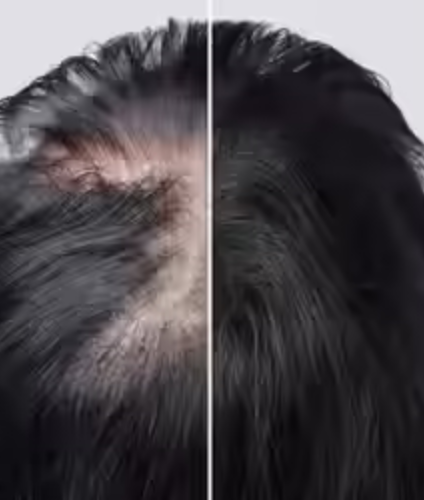
Why Choose Svaasth Clinic for Hair Loss
At Svaasth Skin & Hair Clinic, we focus on scientifically proven solutions for hair loss through expert diagnosis and personalized care. Our approach combines medical expertise, advanced diagnostic tools, and effective treatments to restore healthier, stronger hair.
1. Detailed Consultation
Specialists evaluate hair loss causes, medical history, lifestyle factors, and scalp condition to create personalized treatment plan.
2. Trichoscan Analysis
Advanced polarized Trichoscan technology analyzes scalp condition, hair density, thickness, and regrowth potential for accurate diagnosis.
3. Medical Investigations
Identifying nutritional deficiencies and health issues helps control hair fall and supports healthy hair regrowth.
4. Procedural Treatments
Advanced procedures stimulate hair follicles, improve scalp health, and promote thicker, fuller hair growth.
Hair care Routine
Simple Routine for Stronger Hair Growth
Following a proper hair care routine helps maintain scalp health, reduce
hair fall, strengthen hair roots, and promote healthy hair growth.
Regular Washing
Wash hair according to scalp condition and lifestyle to remove oil, dirt, and maintain a healthy scalp environment.
Right Shampoo
Choose shampoo suitable for your scalp type; baby shampoos may not effectively cleanse adult scalp oil.
Use Conditioner
Apply conditioner after washing to reduce hair breakage, prevent split ends, and keep hair smooth and manageable.
Healthy Diet
Include protein rich foods, leafy vegetables, and iron sources to strengthen hair roots and support healthy growth.
Avoid Damage
Limit chemical treatments and heat styling like coloring, ironing, perming, and straightening to prevent hair weakening.
Stress Control
Managing stress through exercise, sleep, and relaxation techniques helps maintain healthy hair growth and reduce hair fall.
Treatment Options for Hair Loss at SVAASTH
At Svaasth Skin & Hair Clinic, hair loss treatments are recommended based on the underlying cause and individual scalp condition. Our specialists design personalized plans that may include advanced therapies and medical solutions to promote healthy hair regrowth.
Treatment options may include:
Peptide-based hair growth solutions – Stimulate hair follicles and support healthier hair growth by improving scalp nourishment and follicle strength.
Vitamin and nutritional supplements – Help correct deficiencies and strengthen hair roots by supplying essential nutrients needed for healthy hair growth.
Minoxidil therapy for hair regrowth – Promotes hair growth and slows down hair thinning by increasing blood circulation to hair follicles.
Platelet-Rich Plasma (PRP) treatment – Uses growth factors to stimulate hair follicle activity and improve hair thickness and natural regrowth.
Prescribed oral medications – Help control hair loss and support healthy regrowth by regulating hormones and improving scalp health.
Book Your Appointment Today
Looking for an effective solution for hair loss? Schedule an appointment at Svaasth Skin & Hair Clinic today.
Frequently Asked Questions
Some types of hair loss can be controlled or reversed with proper treatment, while genetic hair loss may require ongoing management.
If you notice excessive shedding, thinning hair, or a receding hairline, consult a specialist for early diagnosis and treatment.
BOOK AN APPOINTMENT